
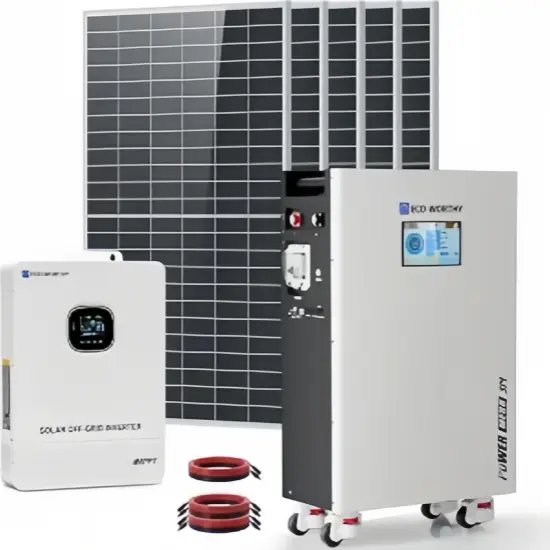
From remote agricultural farms and off-grid eco-resorts to mining sites and rural communities, establishing a stable electricity supply without grid access used to be an expensive, diesel-dependent challenge. Today, off-grid solar power systems paired with robust battery storage offer a far cleaner, quieter, and more cost-effective alternative.
However, designing an off-grid solar microgrid that functions reliably 365 days a year requires careful planning. If you are a project developer or engineer, here are the three most critical factors to consider:
1. Accurate Load Calculation and System Sizing
Unlike grid-tied systems where the utility grid acts as a safety net, an off-grid system must be entirely self-sufficient. Under-sizing your system will lead to blackouts, while over-sizing leads to wasted capital.
-
Peak Demand vs. Daily Consumption: You must calculate not only the total kilowatt-hours (kWh) consumed daily but also the peak wattage (kW) required when high-draw appliances (like pumps or heavy machinery) start up simultaneously.
2. Battery Chemistry and Autonomy Days
In an off-grid setup, your energy storage battery is your life support system.
-
LiFePO4 is the Gold Standard: Traditional lead-acid batteries are cheap upfront but degrade rapidly under deep discharge. Modern lithium iron phosphate (LiFePO4) batteries offer up to 6,000 charge cycles, a 10-year lifespan, and can be discharged up to 90% without damage, making them the most cost-effective long-term choice.
-
Autonomy: Ensure your battery bank is sized to provide at least 1.5 to 2 “Days of Autonomy” to keep critical loads running through consecutive rainy or overcast days.
3. Industrial-Grade Inverter Reliability
Off-grid solar inverters must be incredibly resilient. They face harsh environment challenges, dusty conditions, and severe voltage fluctuations. Opt for heavy-duty, pure sine wave off-grid or hybrid inverters equipped with smart generator-start functions, allowing a backup generator to kick in automatically if the battery level drops too low during extreme weather.
Partner with a Trusted Manufacturer
Building a reliable off-grid system requires high-quality, perfectly synchronized components. We manufacture and supply fully integrated off-grid solar kits, ensuring that every panel, battery, and inverter is pre-configured for maximum synergy and field reliability.
Hi, this is a comment.
To get started with moderating, editing, and deleting comments, please visit the Comments screen in the dashboard.
Commenter avatars come from Gravatar.